
Pure Cotton Dhoti: Complete Buyer’s Guide for Comfort & Tradition
If you’ve ever worn a Pure Cotton Dhoti on a warm summer afternoon or during a sacred ritual, you already know the feeling is unlike anything else. Breathable, dignified, and deeply rooted in South and North Indian culture, the cotton dhoti is not just clothing — it is a living tradition. At Nooliya Clothings, we have spent years understanding exactly what makes a dhoti truly exceptional, and in this guide, we share everything you need to know before making your purchase.
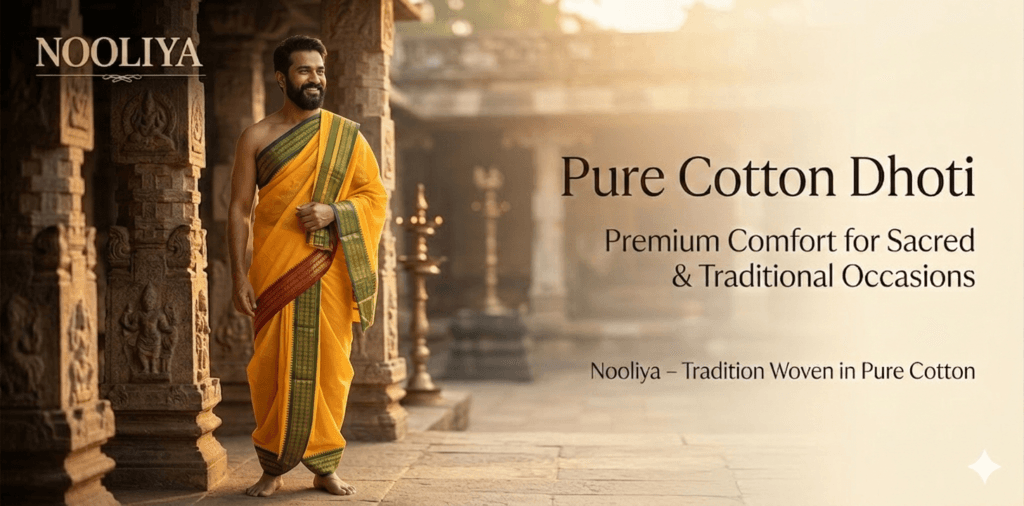
What Makes a Pure Cotton Dhoti Different from the Rest?
A genuine pure cotton dhoti is woven entirely from 100% natural cotton yarn — no synthetic filaments, no chemical blends. The result is a fabric that breathes, absorbs moisture efficiently, and softens beautifully with every wash. For religious ceremonies, hot-weather festivals, or daily wear in tropical climates, nothing compares.
Not all dhotis are made equal. Walk into any market and you’ll find options that claim to be ‘cotton’ but blend in polyester or viscose to reduce manufacturing costs. These blended fabrics might look similar on the shelf, but they behave completely differently on your body.
Key Properties of Genuine Pure Cotton Fabric
- High breathability — cotton fibres allow natural air circulation
- Moisture absorption — keeps you dry even during long ceremonies
- Hypoallergenic — ideal for sensitive skin, elders, and children
- Biodegradable — an environmentally responsible choice
- Durability — quality cotton dhotis last for years with proper care
Pure Cotton vs. Blended Dhotis: A Comparison
| Feature | Pure Cotton Dhoti | Blended (Poly-Cotton) |
| Breathability | Excellent | Moderate |
| Moisture Wicking | High | Low |
| Skin Comfort | Very Soft | Can Feel Scratchy |
| Durability | Long-lasting | Tends to Pill |
| Eco-Friendliness | Biodegradable | Non-biodegradable |
| Ceremonial Suitability | Traditional & Preferred | Generally Avoided |
| Price Point | Moderate to Premium | Low to Moderate |
Types of Pure Cotton Dhotis Available at Nooliya Clothings
One of the hallmarks of Nooliya Clothings is the sheer depth of our collection. We don’t believe in a one-size-fits-all approach. Different occasions, different regional traditions, and different personal preferences call for different weaves, widths, and border styles.
1. Handloom Cotton Dhotis
Handloom dhotis are woven entirely by skilled artisans on traditional pit looms or frame looms. The weave is slightly uneven in texture — not a defect, but the signature of human craft. These dhotis carry cultural heritage in every thread and are especially prized for weddings, religious pujas, and auspicious occasions.
2. Mill-Woven Cotton Dhotis
Mill-woven pure cotton dhotis offer consistent thread count and uniform width. They are ideal for daily wear, office-going priests, or buyers who want reliable quality at a predictable price point. Nooliya Clothings sources its mill-woven range from certified looms that maintain strict quality standards.
3. Zari Border Cotton Dhotis
These feature gold or silver zari (metallic thread) woven along the border — a staple for South Indian temple rituals, Tamil Brahmin ceremonies, and formal occasions. The zari is tested for colour fastness to ensure it doesn’t tarnish or bleed after washing.
4. Plain White Cotton Dhotis
Simple, clean, and versatile. Plain white pure cotton dhotis are the everyday workhorse — worn by farmers at dawn, worn by priests in temples, and even adopted as a fashion statement by the new generation reclaiming traditional wear.
5. Colour & Printed Cotton Dhotis
Regional traditions across India call for coloured dhotis in specific hues — cream, off-white, light yellow, and pastel shades. Nooliya Clothings offers a curated range of naturally dyed and printed cotton dhotis that stay true to tradition while appealing to contemporary tastes.
How to Identify Genuine Pure Cotton Dhotis Before Buying
The market is full of mislabelled fabrics. Here are practical tests and checks that experienced buyers and textile professionals use — and that Nooliya Clothings trains its team to apply:
- Burn Test: Pure cotton burns with a steady flame, smells like burning paper, and leaves a soft ash. Synthetic blends melt, smell like plastic, and form hard beads.
- Touch Test: Cotton feels soft and slightly warm to the touch. Polyester feels cool and slippery.
- Absorbency Test: Place a drop of water on the fabric. Pure cotton absorbs it immediately. Blends resist and bead up.
- Certification Check: Always look for BIS certification or OEKO-TEX Standard 100 labelling when shopping online.
- Weave Density: Hold the dhoti against light. A uniform, tight weave with natural slight irregularities (in handloom) is a good sign.
What Separates a True Expert in Pure Cotton Dhotis from Others?
There is an enormous gap between sellers who trade in dhotis and those who truly understand them. This distinction matters deeply when you are making a purchase for a once-in-a-lifetime ceremony or buying in bulk for a temple, institution, or retail store.
Practical Expertise vs. Theoretical Knowledge
Many in the trade can recite fabric specifications — thread count, GSM, weave type. But Nooliya Clothings operates from a different foundation: hands-on experience with weavers, direct visits to loom clusters in textile-producing regions, and years of feedback from real customers.
- We know that a 120-count pure cotton dhoti drapes differently from an 80-count one — and which is appropriate for which occasion.
- We understand that pre-washed (sanforized) cotton dhotis shrink minimally, while unwashed ones need to be bought slightly larger.
- We can advise on which border width suits a Brahmin puja versus a Chettinad wedding versus a Kerala sadya feast.
- We recognise regional naming conventions: ‘veshti’ in Tamil Nadu, ‘mundu’ in Kerala, ‘dhoti’ across North India — and the subtle weave differences each tradition demands.
This depth of contextual knowledge is what makes the difference. It cannot be acquired from a product catalogue — it comes only from years of immersive experience in the textile ecosystem.
Occasions and Use Cases for Pure Cotton Dhotis
One of the most common questions we receive at Nooliya Clothings is: ‘Which dhoti is appropriate for my occasion?’ Here is a practical breakdown:
| Occasion | Recommended Type | Key Feature |
| Temple Worship / Puja | Handloom Zari Border | Sacred, traditional, auspicious |
| Weddings (Groom) | Premium Zari 120-Count | Lustrous, drapeable, photogenic |
| Daily Wear | Mill-Woven Plain White | Durable, easy to wash |
| Cultural Festivals | Coloured / Printed Cotton | Vibrant, regionally appropriate |
| Gifting (Elders) | Handloom Off-White | Respectful, high perceived value |
| Temple Donations (Dana) | Plain White Bulk Cotton | Cost-effective, pure |
| Fashion / Fusion Wear | Printed or Coloured Cotton | Contemporary, versatile |
Why Nooliya Clothings Is the Best Choice for Pure Cotton Dhotis
Nooliya Clothings was founded on a single conviction: that traditional Indian textiles deserve to be presented with the same care, transparency, and pride that premium global brands give their products. We started not with a business plan but with a deep personal connection to handloom culture and the artisans who sustain it.
Direct Weaver Relationships
We work directly with weaving clusters — cutting out middlemen and ensuring that the weavers receive fair compensation. This also means that what reaches you is exactly what was woven: no storage shortcuts, no fabric substitutions, no deceptive packaging.
Quality Control at Every Stage
Every batch of pure cotton dhotis at Nooliya Clothings goes through a multi-stage quality check: raw yarn verification, mid-loom inspection, finished fabric assessment, and wash testing. Only dhotis that pass all four stages are added to our collection.
Transparent Material Claims
We never use the word ‘cotton’ loosely. Every product listed under pure cotton is backed by documentation and is subject to return if found otherwise. Our customers have come to trust this claim — and we protect it fiercely.
Breadth of Offering
Whether you’re a homemaker buying a dhoti for her husband’s puja, a temple trust procuring in hundreds, or a fashion stylist sourcing for a shoot — Nooliya Clothings has the depth of inventory and the flexibility to serve you.
Customer-Centric Guidance
Buying a dhoti online can be confusing, especially when you’re unsure about sizing, draping style, or weave quality. Our team is trained to guide you through the selection process with patience and product knowledge — not sales pressure.
How to Care for Your Pure Cotton Dhotis
Proper care dramatically extends the life and appearance of your dhoti. Here are the best practices we share with every Nooliya Clothings customer:
- First wash: Always wash before wearing. Use cold or lukewarm water with a mild detergent.
- Machine wash: Use a gentle cycle. Avoid tumble drying — air drying in shade preserves the fibres.
- Zari borders: Hand wash or use a wash bag. Avoid wringing zari borders to prevent distortion.
- Starch (mavu): Traditional starch gives the dhoti its stiff, ceremonial appearance. Apply lightly and iron while slightly damp.
- Storing: Fold along the original creases. Store in a dry, airy place — avoid plastic bags which trap moisture.
- Avoid bleach: Bleach weakens cotton fibres and yellows the fabric over time. Use lemon juice as a natural whitener if needed.
Frequently Asked Questions About Pure Cotton Dhotis
Q1: What is the difference between a dhoti and a veshti?
The terms refer to the same garment but are used regionally. ‘Dhoti’ is the North Indian term; ‘veshti’ is used in Tamil Nadu; ‘mundu’ is common in Kerala. The weave, border style, and draping method differ by region.
Q2: How many metres of fabric make up a standard dhoti?
Most standard dhotis range from 4 to 9 metres depending on the region and style. Tamil veshtis are typically 4–4.5 metres; North Indian dhotis are often 5 metres or more.
Q3: Are pure cotton dhotis suitable for people with sensitive skin?
Yes. Pure cotton is hypoallergenic and free from synthetic irritants. It is widely recommended by dermatologists for individuals with eczema, rashes, or heat-related skin sensitivity.
Q4: Do pure cotton dhotis shrink after washing?
Unsanforized (not pre-shrunk) cotton dhotis may shrink 3–5% on first wash. Nooliya Clothings labels each dhoti clearly regarding pre-washing treatment so buyers can account for this when ordering.
Q5: How do I choose the right GSM for my dhoti?
GSM (grams per square metre) indicates fabric weight. For daily wear, 120–150 GSM works well. For ceremonial or heavy-drape occasions, 160–200 GSM provides better body and structure. Nooliya Clothings lists GSM details on every product page.
Q6: Can pure cotton dhotis be gifted?
Absolutely. A handloom pure cotton dhoti is one of the most thoughtful, culturally resonant gifts you can give — especially to elders, spiritual teachers, or on auspicious occasions. Nooliya Clothings offers curated gifting packages with traditional packaging.
Additional Resources & References
For readers who wish to explore the science of cotton textiles or India’s handloom heritage further, the following external sources provide authoritative information:
- Ministry of Textiles, Government of India (texmin.nic.in) — India’s official handloom policy and weaver welfare schemes.
- OEKO-TEX Association (oeko-tex.com) — Standards and certifications for safe, sustainable textiles.
- Weavers Service Centres (WSC) — Regional support centres for Indian handloom weavers.
- Bureau of Indian Standards (bis.gov.in) — Quality standards for textile labelling and fabric safety.
Internal Links to Explore on Nooliya Clothings: Zari Border Dhotis | Bulk Orders for Temples | Cotton Care Guide | About Nooliya
Ready to Experience the Difference?
If you’ve read this far, you already know more about pure cotton dhotis than most buyers ever will. Now, the next step is simply feeling the difference.
Nooliya Clothings invites you to explore our collection — not with a hard sell, but with genuine confidence that once you hold a properly sourced, authentically woven pure cotton dhoti, you’ll understand immediately why we care so deeply about getting this right.
Browse our curated selection, reach out with questions, or request a fabric swatch if you’re ordering in bulk. We’re here not just to sell you a dhoti — but to help you find the right one.
nooliya clothings — Woven with Purpose. Worn with Pride.
Explore Our Instagram page Nooliya Clothings
Pingback: Pure Cotton Dhoti for Wedding Ceremony: The Definitive Guide by Nooliya Clothings - Nooliya – Pure Cotton Divine Wear